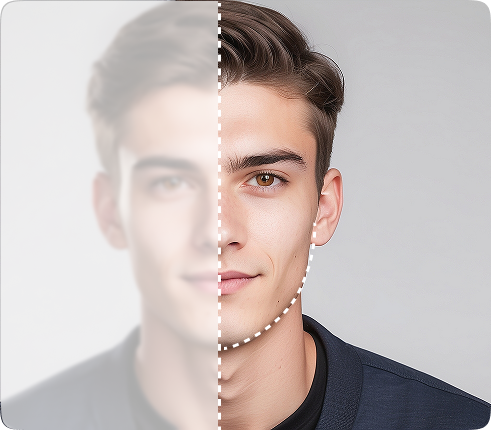
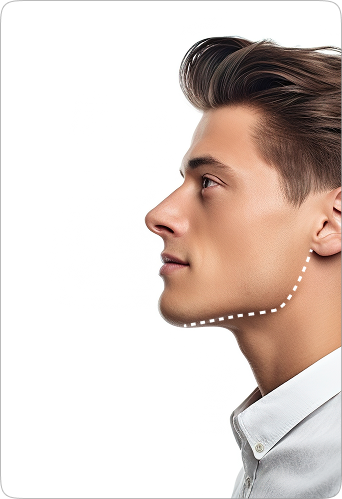
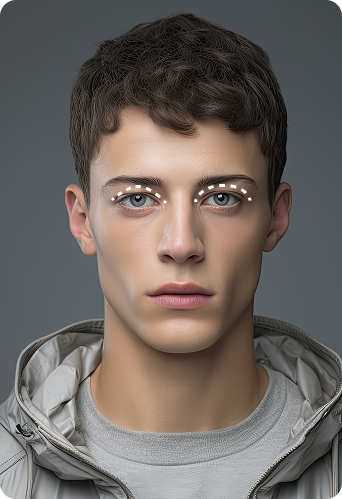
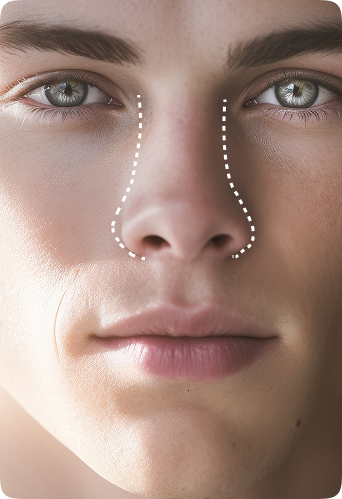
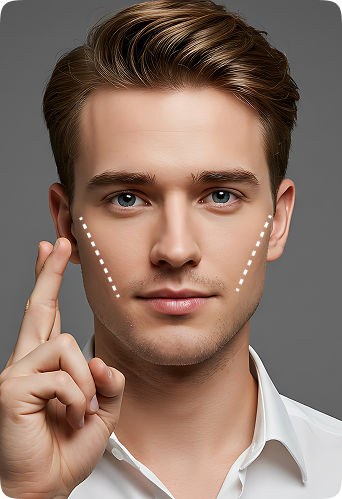
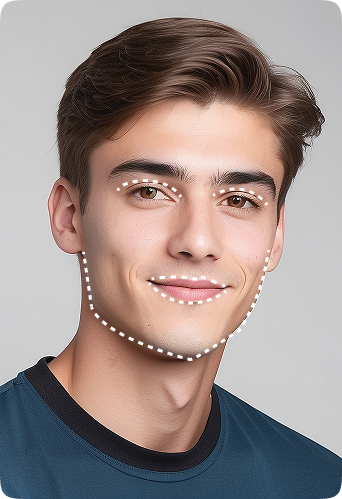
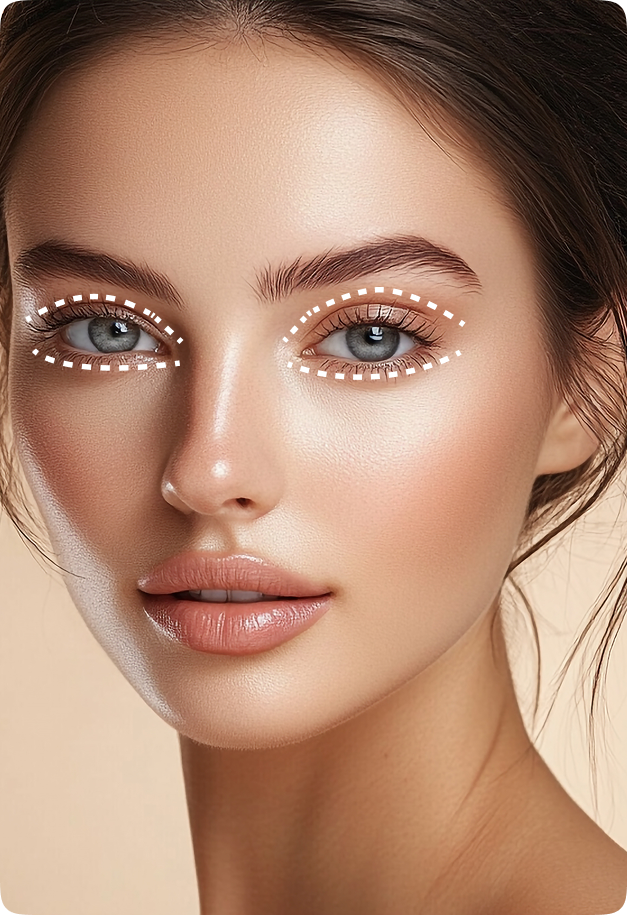
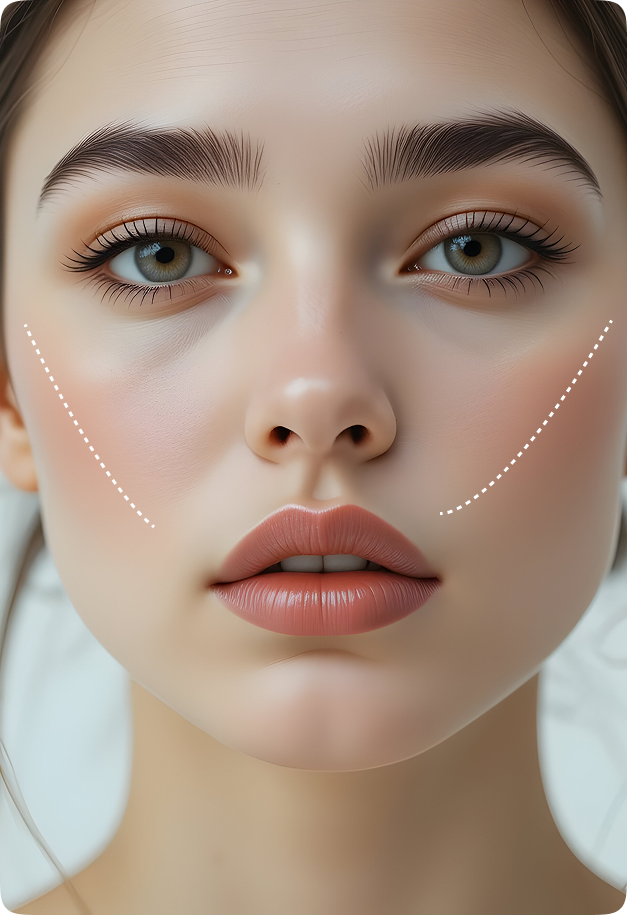
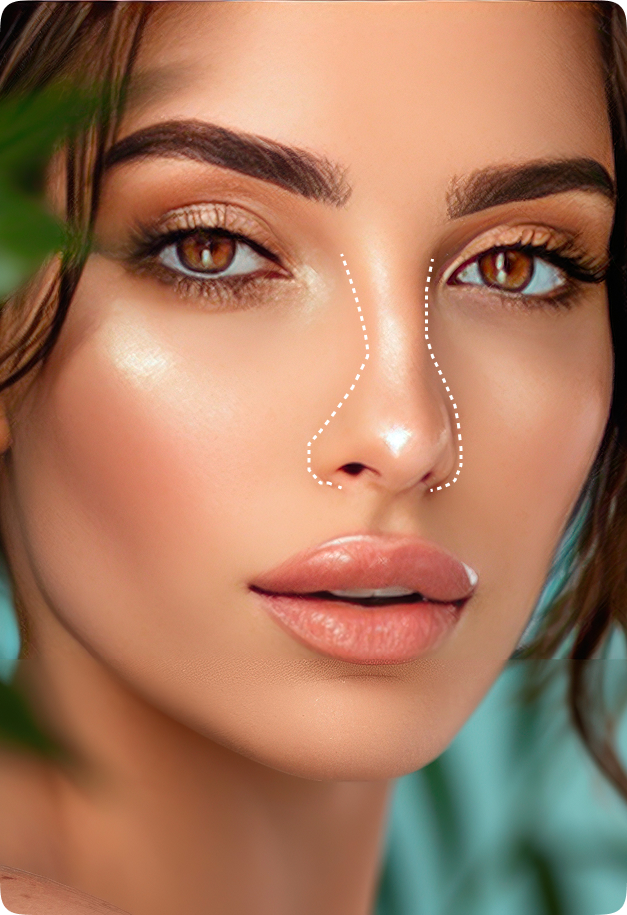
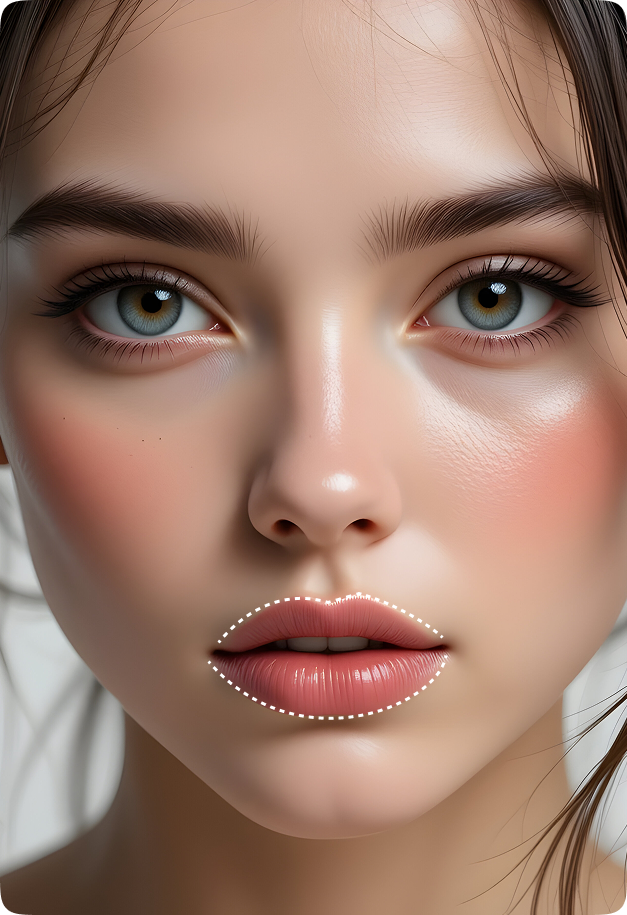
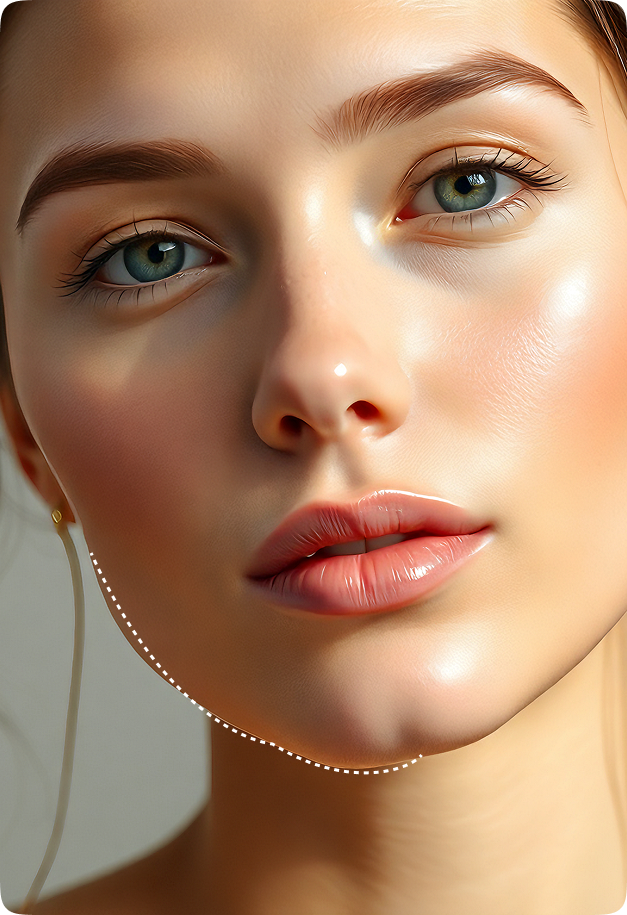
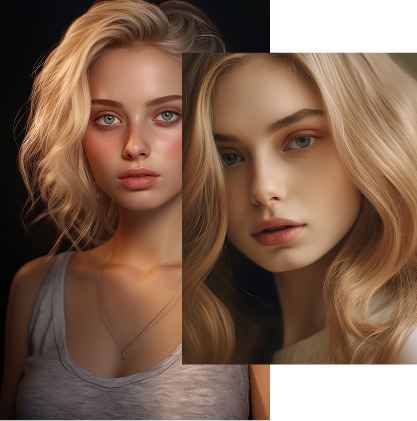
A symmetrical face refers to a face where the left and right sides closely resemble each other in shape, size, and alignment. When divided down the center, facial features such as the eyes, eyebrows, cheekbones, nose, lips, and jawline appear more evenly balanced. Perfect symmetry is extremely rare, and small differences between sides are completely natural.
Face symmetry is measured by comparing the position and proportions of facial features on both sides of the face. Online face symmetry tools use image analysis to detect facial landmarks and estimate how closely the left and right sides align. Results depend on photo quality, lighting, angle, and facial expression.
These characteristics are general observations and can vary widely between individuals.
What Defines a Symmetrical Face in Females?
Facial symmetry appears differently across individuals and cultures, and no single feature determines appearance.
Key Features of a Symmetrical Face
These features are commonly associated with facial balance, though no face displays all of them perfectly.
01
Equal Facial Proportions
Eyes, eyebrows, nose, lips, and jawline align evenly on both sides.
02
Straight Facial Midline
The nose, lips, and chin form a straight vertical line down the center.
03
Matching Eye Level
Both eyes sit at the same height with equal spacing.
06
Consistent Skin Tone
Smooth, even skin texture makes it look symmetrical.
05
Even Jawline
A well-defined jawline with no major differences on both sides.
04
Balanced Cheekbones
Similar height and width on each side for a uniform look.
Highly Symmetrical Faces in Popular Culture
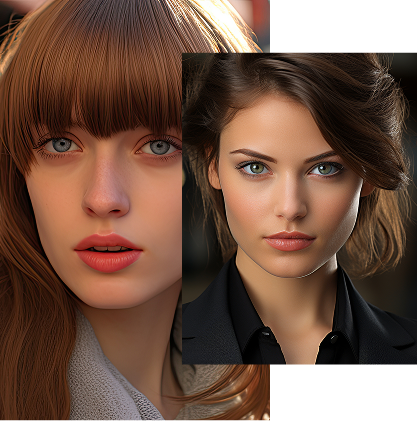
There is no scientifically agreed-upon “most symmetrical face.” Some studies and media discussions reference public figures when discussing facial balance, but symmetry varies depending on measurement methods, images used, and individual perception. Beauty and facial harmony are subjective and influenced by many factors beyond symmetry alone.
Facial symmetry is largely influenced by genetics, and no exercise can create perfect symmetry. The activities below focus on facial awareness and relaxation rather than altering facial structure.
Jawline Stretches
Tilt your head back until you are looking at the ceiling.
Move your lower jaw forward. You should feel a stretch under your chin and jaw.
Hold this position for 10 seconds. Then return to a normal position.
Repeat 10-15 times for one set. Go for 2-3 sets per day.
Cheek Lifts
Smile as wide as you can. Don’t show your teeth.
Place your fingertips on the tops of your cheekbones.
Gently push up on your cheeks to lift them higher.
Hold for 10-15 seconds. Then relax.
Repeat 10-15 times for one set. Try to do 2-3 sets daily.
Eyebrow Tilts
Place the index and middle fingers of both hands on your forehead, above your eyebrows.
Press down to hold your eyebrows in place.
Try to raise your eyebrows, using the muscles under your fingers.
Hold for 5-10 seconds. Then relax.
Repeat 10 times for one set. Do this 2-3 times a day.
These activities are for general awareness only and are not medical or cosmetic treatments.
Check Your Face Symmetry
Our symmetrical face identifier gives you a detailed look at how each feature aligns on both sides of your face.
Symmetrical facial features mean the left and right sides of your face look very similar when divided down the middle. Things like your eyes, eyebrows, cheekbones, nose, lips, and jawline are even so your face looks balanced overall.
Not really! Most faces are slightly asymmetrical. Tiny differences between the two sides of the face are completely normal and happen naturally due to genetics, aging, or even daily habits like sleeping on one side.